A Human-Centered Approach to Recruiting
To empower teams to identify and fill open roles with the best talent efficiently, automating the hiring experience supported by informed decisions based on insights.
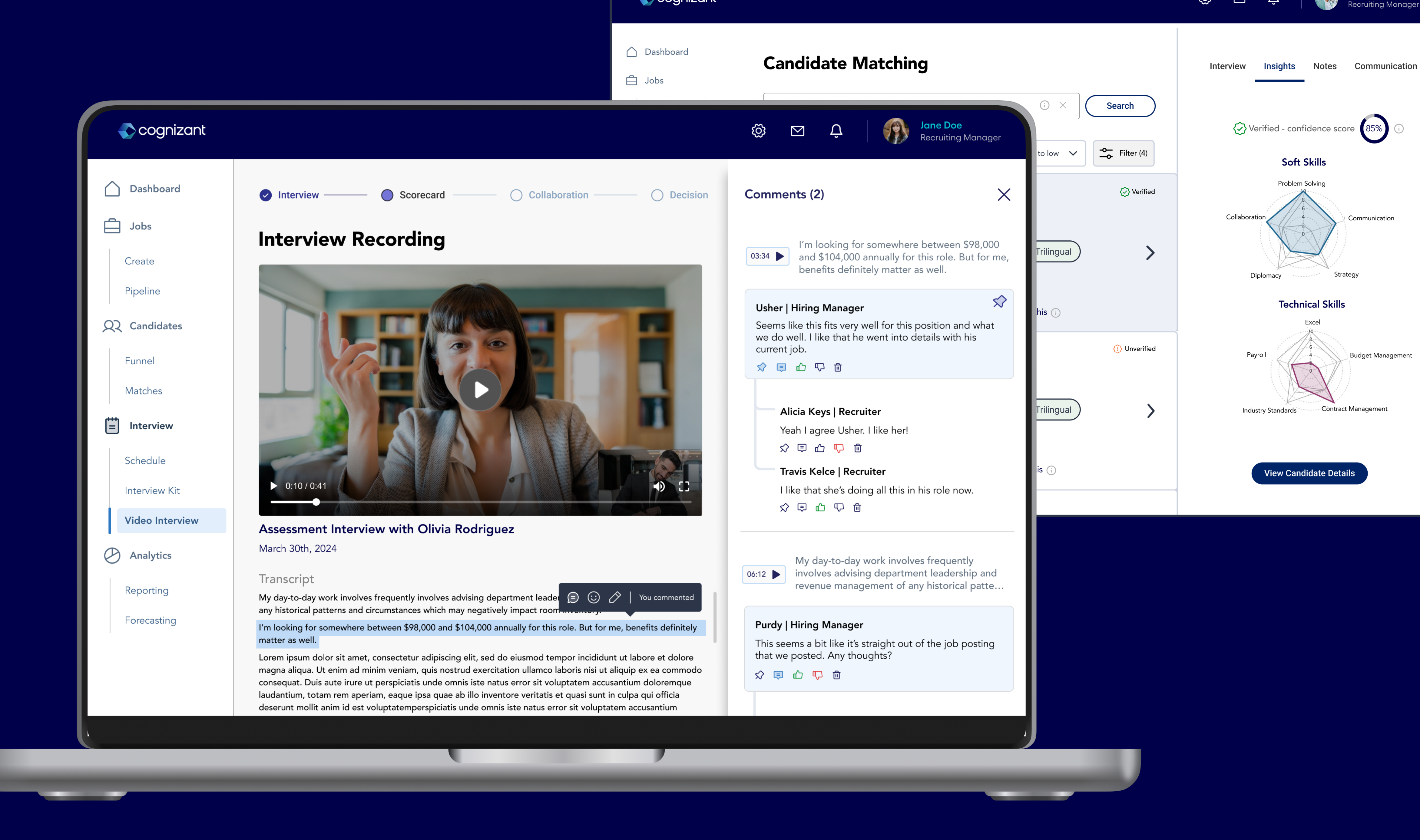
Context
This internal project aimed to reimagine and streamline the internal recruiting process, focusing on enhancing the efficiency and effectiveness of the talent acquisition journey. HR and recruitment leadership identified an opportunity to automate key stages of the hiring process, enabling hiring teams to quickly identify and place top candidates through a more intuitive and data-driven platform.
In many cases the lead time for talent sourcing makes the difference between clients choosing Cognizant for a role vs. going to the competition. A 1% conversion uplift in current source (i.e., 5,000 more of the 500,000 candidates placed) would create in excess of $1.5M per day of acceleration.
However, midway through the initiative, the decision was made to pause the project to better align with existing internal tools and ensure a cohesive strategy for long-term implementation. Due to the pause in work, we pivoted the focus to explore how we could leverage the work done to pitch the solution to our existing clients.
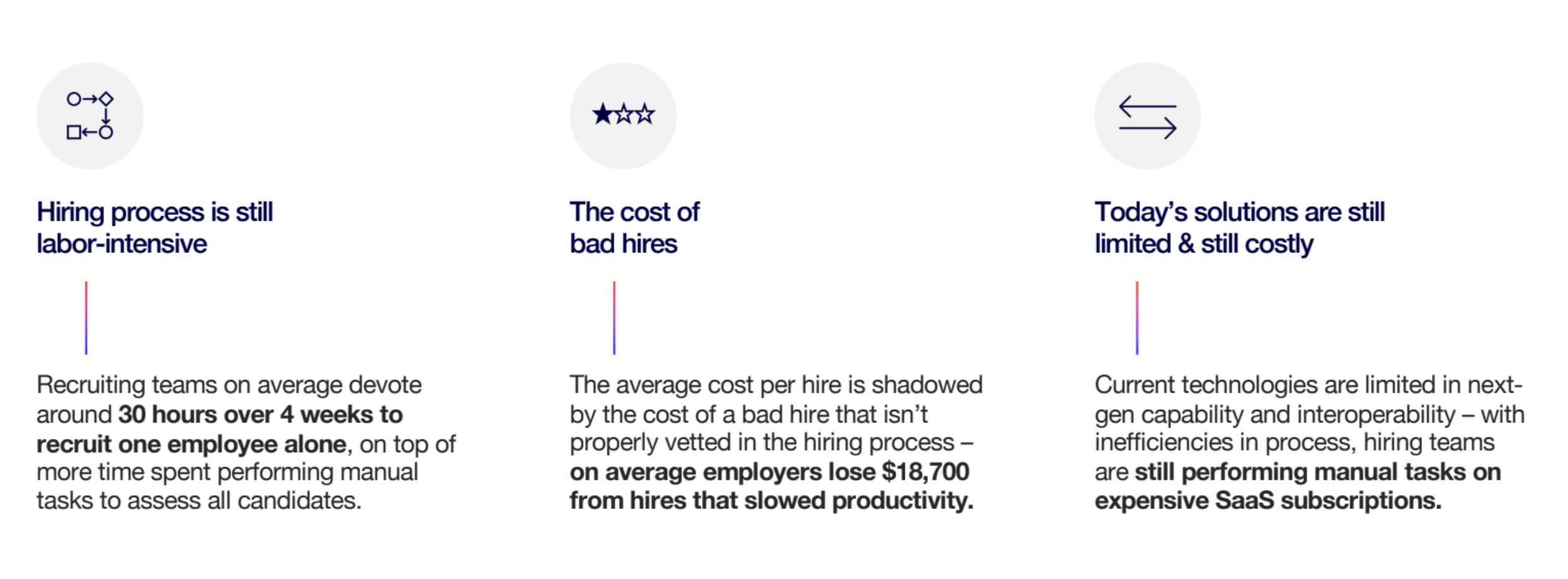
The average cost-per-hire of a new employee (From the Society for Human Resource Management)
Talent Acquisition software industry
over 4 weeks average to recruit 1 employee
average cost of a bad hire that slows productivity
The SmartRecruit Solution
The SmartRecruit tool would enable recruiters to integrate with other systems of data, automate the soft-touch hiring experience, and support informed decisions based on insights from external and internal candidate profiles, industry information, and organizational goals.
The Process
To streamline the HR recruitment process, I followed a structured design approach that combined research, collaboration, and iterative design to ensure the solution directly addressed stakeholder needs and operational bottlenecks.
1. Industry Audit
I began by analyzing recruitment trends and cost structures within the HR and talent acquisition landscape. This included benchmarking time-to-hire, cost-per-hire, and candidate experience standards to understand where inefficiencies translated into business costs and where industry leaders were setting the bar.

2. Competitive Analysis
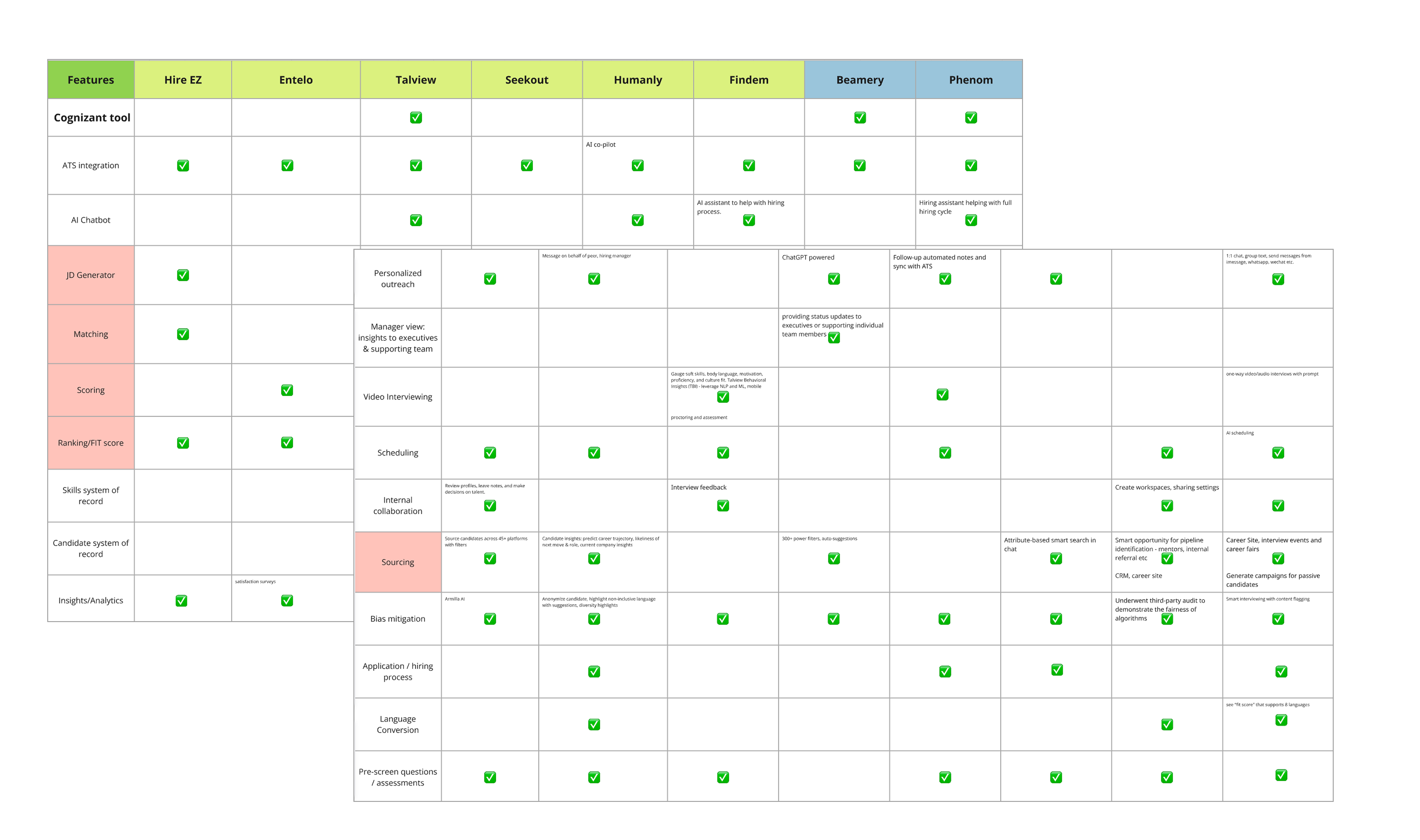
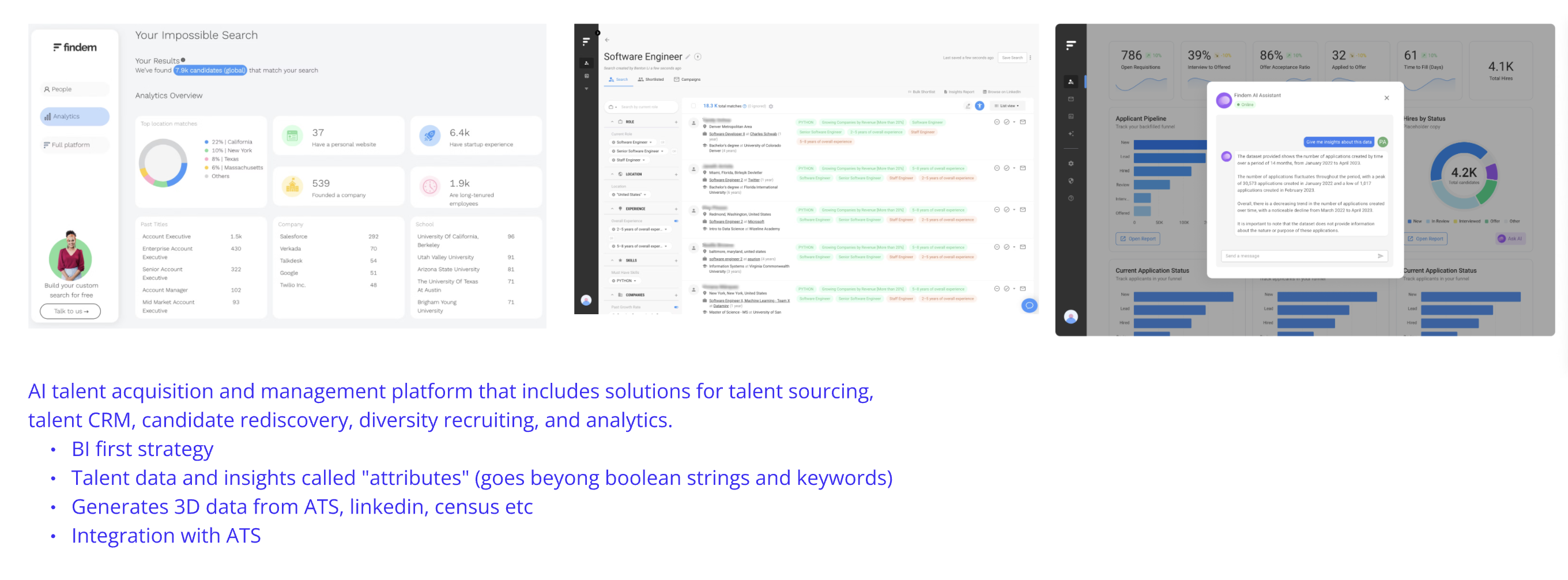
Next, I studied how leading organizations and HR tech platforms approached recruitment. By reviewing both direct and adjacent competitors, I gathered insights into best practices such as automated scheduling, integrated communication tools, and transparent pipeline tracking. This provided inspiration and set a standard for the redesigned experience.

3. Personas & Interviews
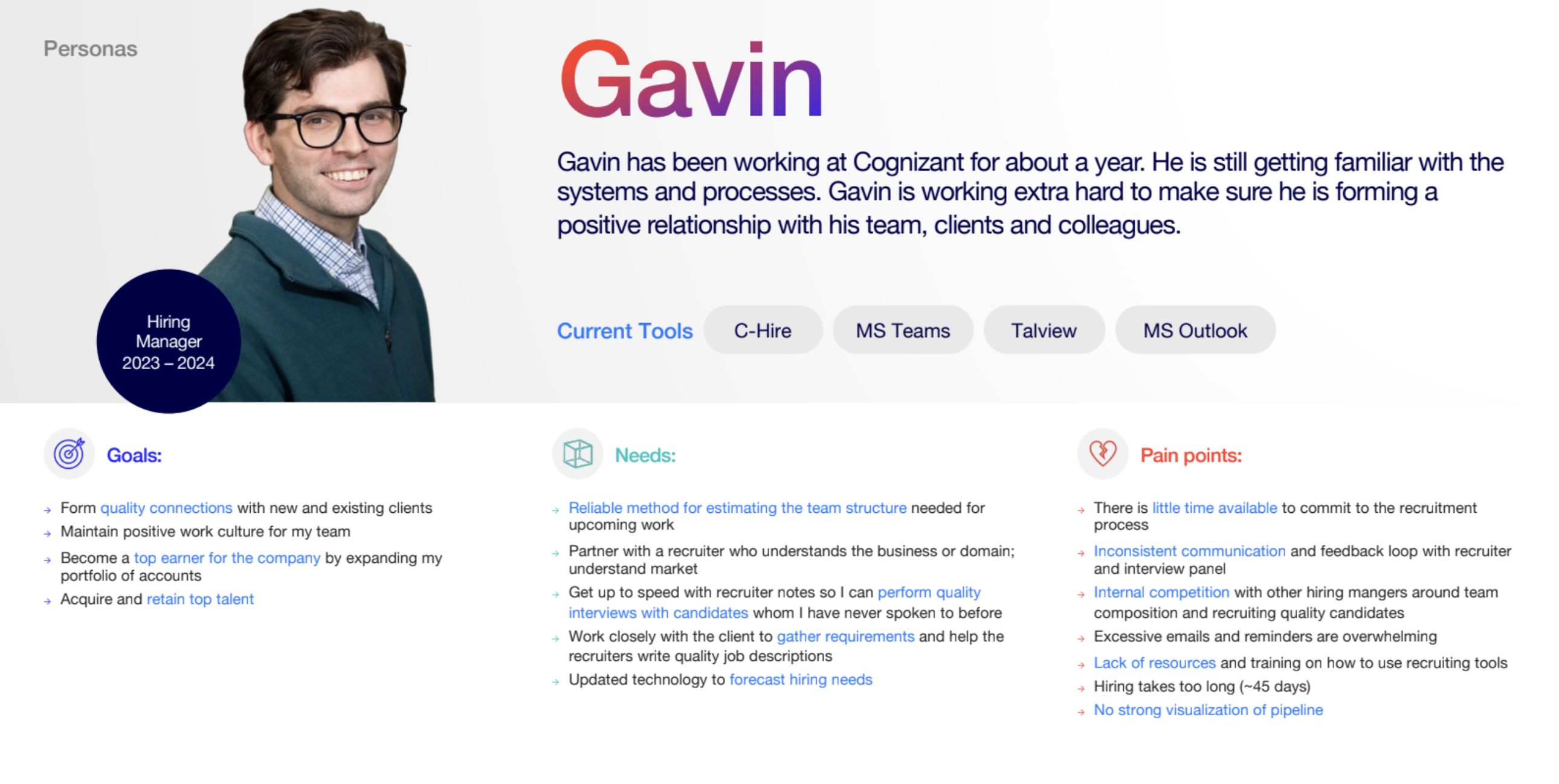
To build empathy and ground design decisions in real needs, I conducted stakeholder interviews with recruiters, hiring managers, and recent candidates. I then developed personas to represent these groups, capturing their goals, frustrations, and motivations throughout the recruitment process.


4. Wireframing
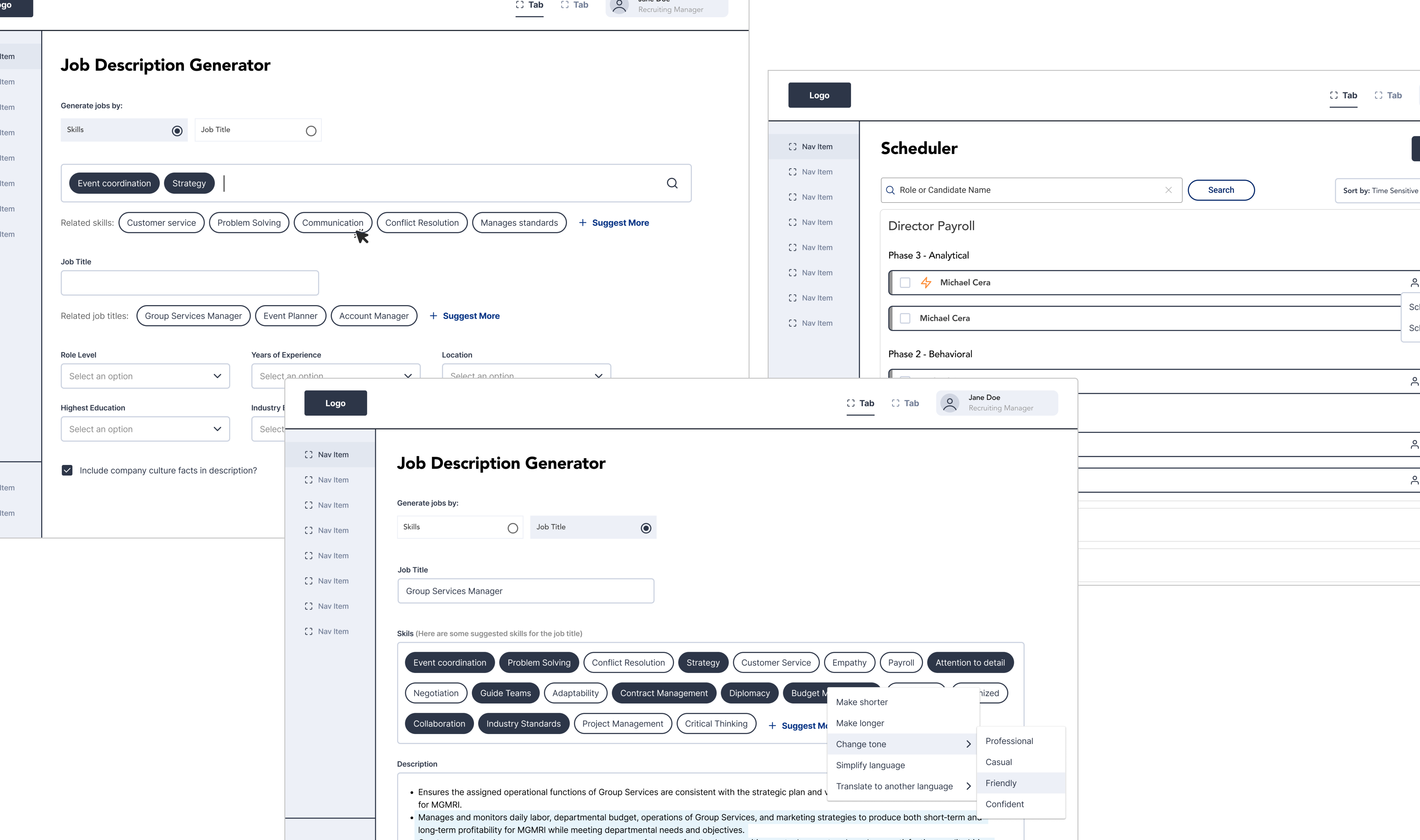
I created wireframes and interactive prototypes to validate key concepts. Usability testing sessions confirmed that the redesigned flows reduced effort, simplified approvals, and made progress more transparent.

5. High Fidelity
Instead of producing fully polished high-fidelity designs, I created mid-fidelity flows and concept screens that were sufficient to communicate the vision. These designs served as an internal proof-of-concept, helping leadership and executives understand the value of a streamlined recruitment process and opening the door to pitch the concept to external clients. The focus was less on final UI polish and more on clearly illustrating the opportunity, workflow improvements, and potential client impact.
Features
Job Description Generation
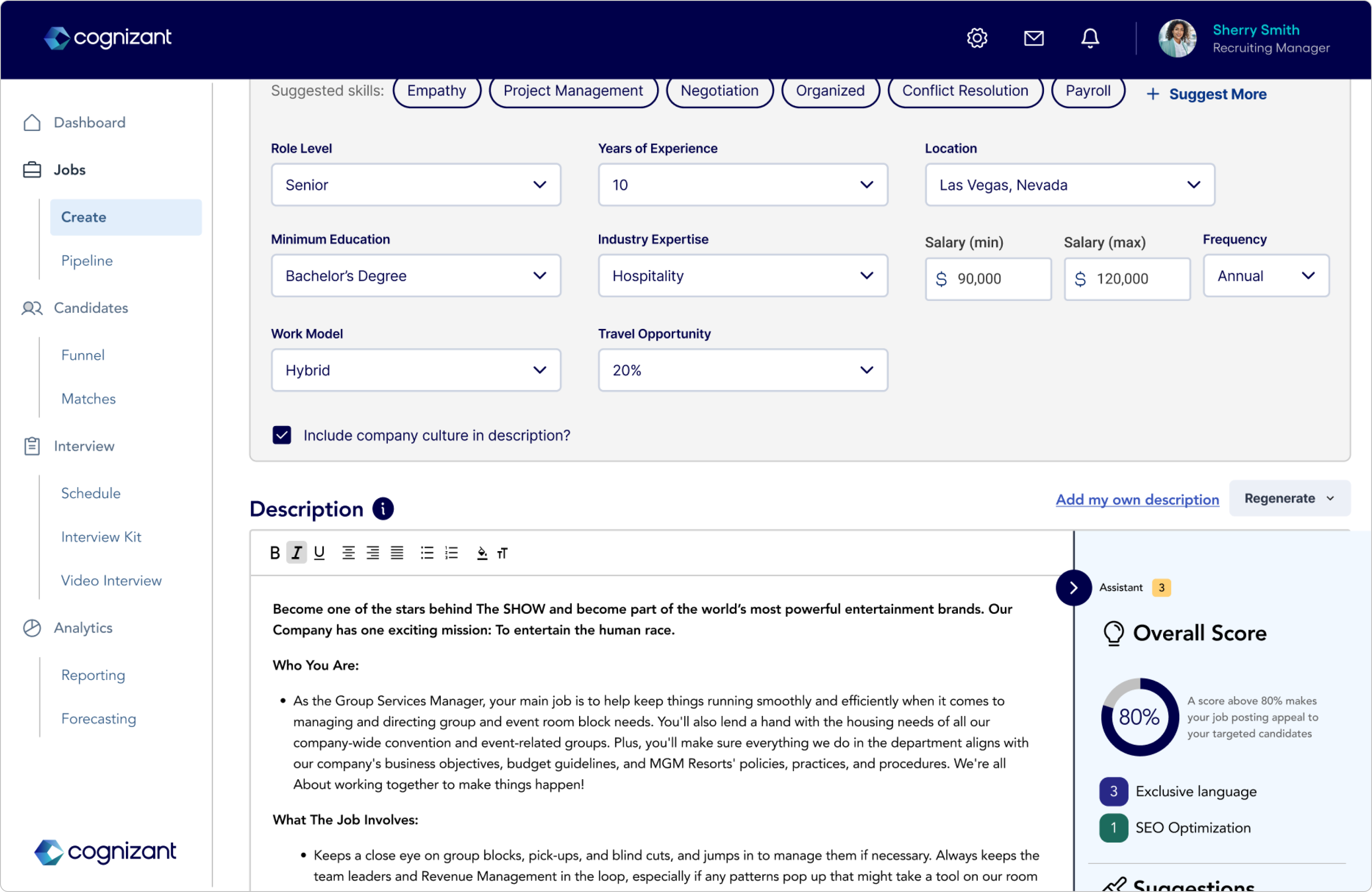
An AI-assisted tool that auto-generates job descriptions with suggested skills, customizable tone, and reusable templates. Recruiters can seamlessly edit, save, or undo changes while updating job insights in real time. Built-in collaboration allows hiring managers and team members to co-create descriptions, define interview panels, and publish postings directly to integrated job boards and career sites.
Candidate Search & Evaluation
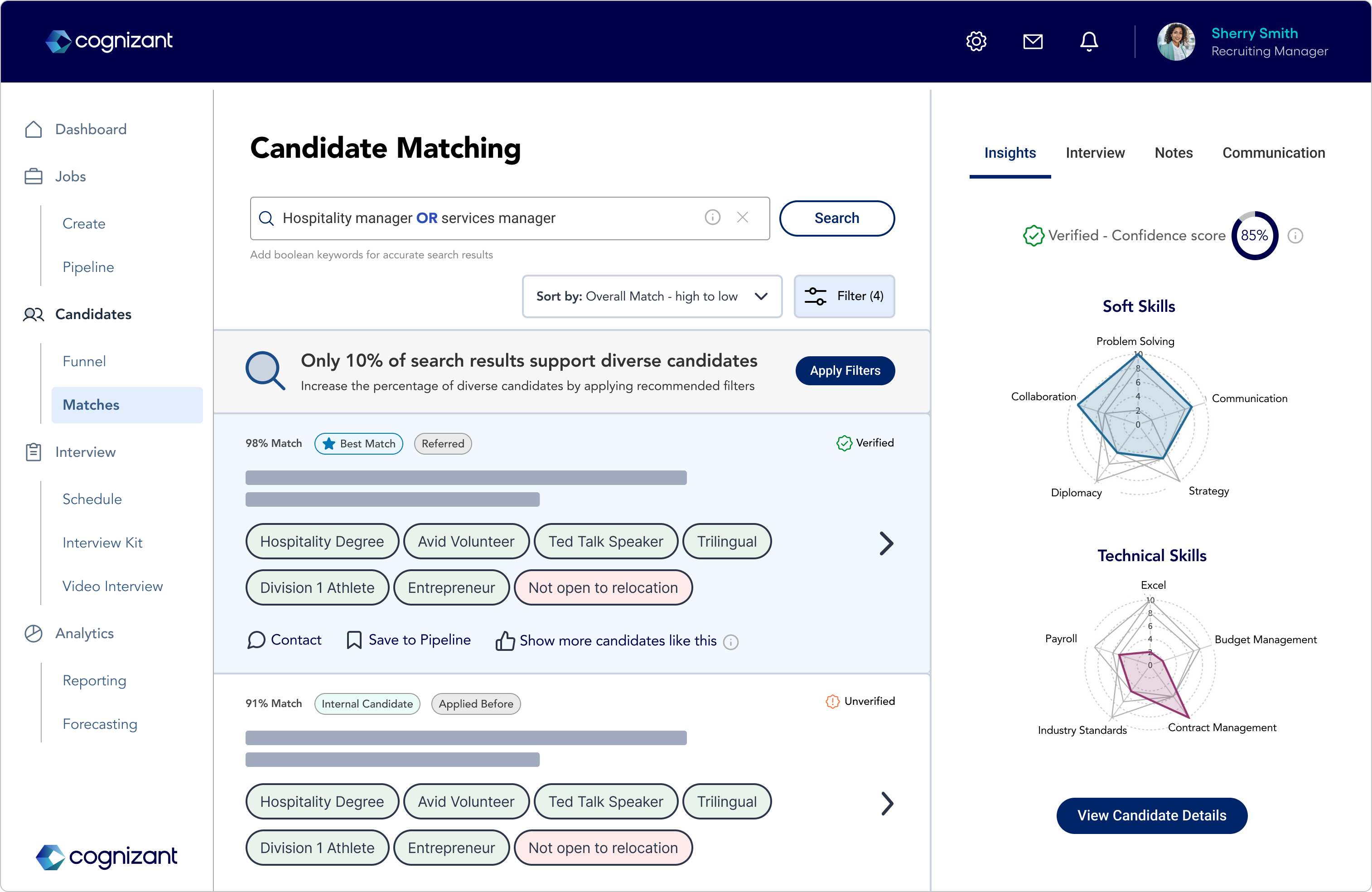
A unified tool that lets recruiters search across all candidate types with Boolean logic, anonymize profiles until interview acceptance, and view credibility scores. It supports diversity goals, previews pre-screening questions, and enables side-by-side comparisons of soft and technical skills for smarter, more equitable hiring decisions.
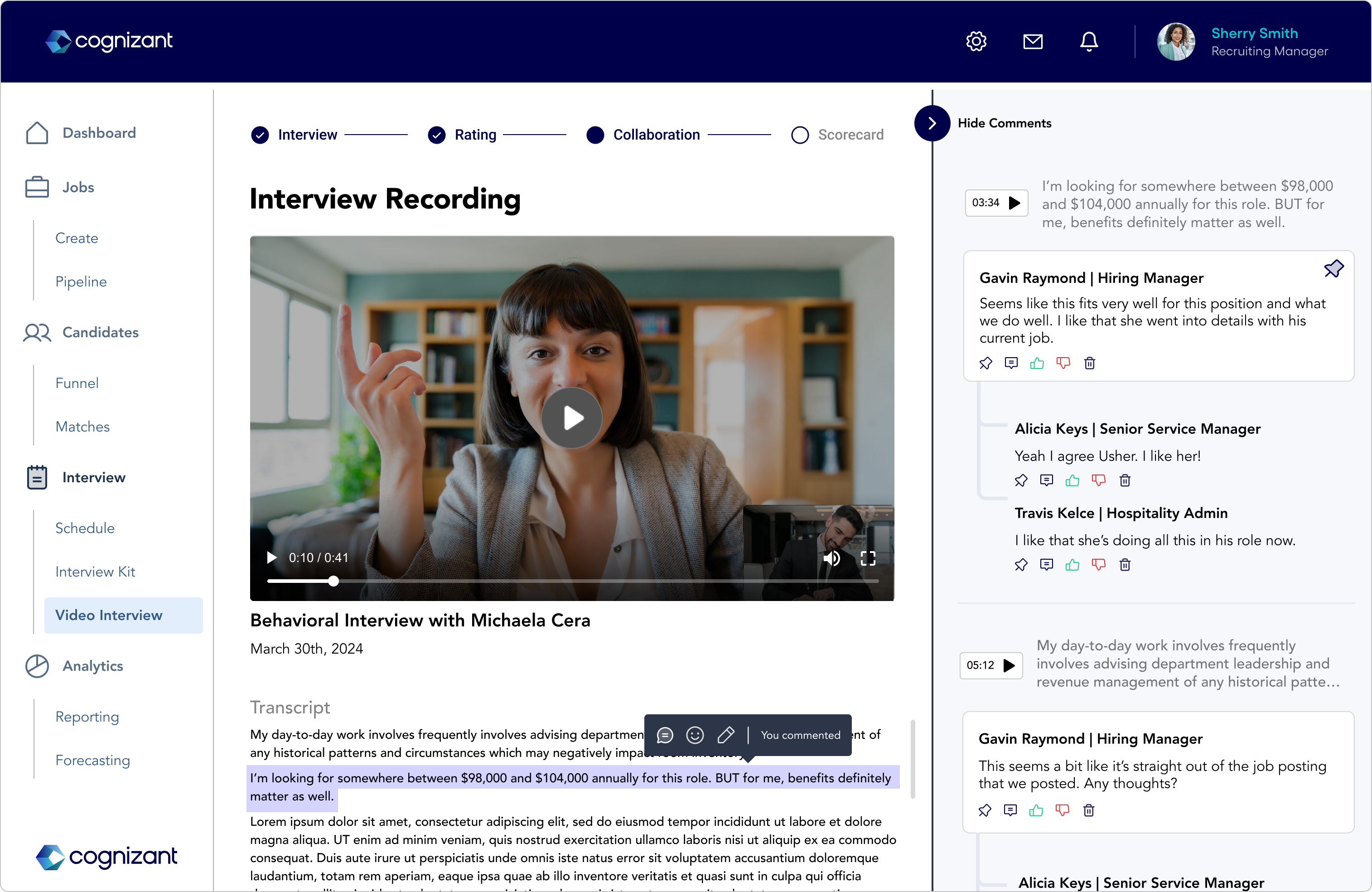
Pre & During Interview
Recruiters can prepare with past Q&A, upcoming topics, and AI-generated questions tailored to candidate gaps. During interviews, real-time transcription, collaborative panel tools, and smart prompts keep conversations on track. Custom workflows, FAQs, and live skill verification ensure consistency while adapting dynamically to each role and candidate.
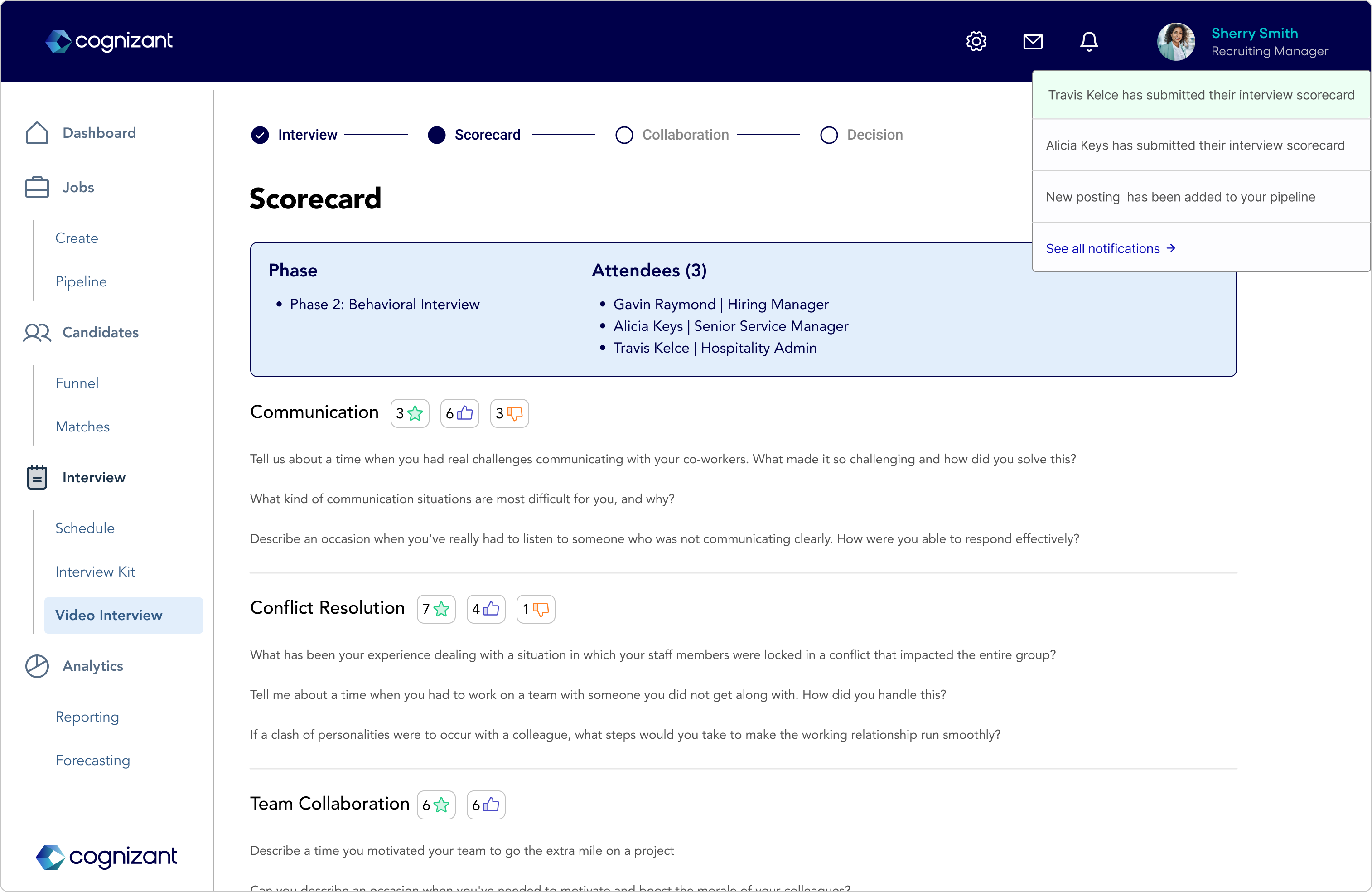
Post-Interview
Enables hiring teams to review interview recordings, add collaborative notes, and share feedback with managers. A scorecard consolidates panelist ratings and suggestions, making it easy to verify skills, gather input, and quickly decide whether to advance or remove candidates.
Results
The project successfully delivered a redesigned recruitment process framework grounded in industry benchmarks, competitor insights, and user-centered research. While the initiative did not translate into immediate client work, it produced tangible design artifacts, including journey maps, personas, prototypes, and high-fidelity flows, that demonstrated Cognizant’s capability to tackle complex internal HR challenges. These outputs created a foundation for future conversations with both internal leaders and potential clients.
Next Steps
Following the project, the team identified clear actions to extend impact and build momentum:
- ✳Seed internal interest: Share outcomes with Client Partners (CPs) and organizational leaders to raise visibility and generate sponsorship opportunities.
- ✳Gauge customer appetite: Explore interest among existing customers to validate the relevance of a streamlined recruitment solution in their contexts.
- ✳Tailor the pitch: Develop customer- and vertical-specific pitch decks that connect the solution directly to each client’s unique pain points and priorities.